
The Dentistry Huddle Delivered.
From us to your inbox, twice a month.
Table of Contents
- Why Dental Patient Billing Needs a Rethink
- Digital-First Billing Approach
- Treat Billing as Part of the Patient Experience
- Automate Follow-Ups Based on Patient Behavior
- Offer Flexible Payment Options
- Use Transparency to Reduce Billing Disputes
- Point-of-Service Collections
- Track the Right Patient Billing KPIs
- Centralization vs Personalization
- Reduce Staff Burnout With Billing Automation
- Proactive, Digital, and Human
Key Takeaways
- Digital-first, automated billing is no longer optional - Paper statements and manual follow-ups can’t keep up with rising patient balances or staffing constraints. Automated, multi-touch digital billing workflows drive faster payments at a lower operational cost.
- Effective billing strategies must be segmented by patient behavior and practice model - Private practices win with simple, personalized workflows, while DSOs require standardized, policy-driven automation to scale. Treating all balances (and all locations) the same leads to revenue leakage.
- The best billing systems reduce friction for both patients and staff - Transparency, point-of-service collections, and flexible payment options improve patient trust while automation reduces staff burnout, making billing a growth lever, not a drain on resources.
Patient billing in dental has changed more in the last five years than in the previous two decades, and this year is accelerating that shift.
Rising patient balances, more carried aging A/R, staffing shortages, and growing consumer expectations mean outdated billing workflows are no longer sustainable. The most successful dental practices and DSOs are rethinking their entire patient billing process. This means using automation, improving transparency, and smarter payment strategies to improve collections without raising net billing costs or hurting the patient experience.
From working with thousands of practices, we have compiled some practical patient billing process adjustments that our leading practices are using to reduce A/R, increase patient payments, and protect cash flow.
Why Patient Billing Needs a Rethink in 2026
Billing-related Issues that have plagued the dental industry for years have continued to compound. These issues are nothing new, however, as patient expectations rise with AI-fueled promises, practices struggle to keep up. In 2026:
- Patients owe more out of pocket than ever before
- Manual billing processes aren’t scaling with staffing constraints
- Patients expect digital, retail-like payment experiences
The consequences of a stagnant “status quo” for the patient financial experience are clear. Traditional “send a statement and wait” billing models lead to:
- Higher Days Sales Outstanding (DSO) and disrupted cash flow
- Patient frustration and delayed care due to fraying relationships and lackluster financial transparency
- Increased write-offs as balances pile up and become uncollectible without expensive agency intervention
A modern billing approach is proactive, automated, and patient-centric. Remember that patient billing shouldn’t be about chasing payments, it should focus on designing systems where patients pay naturally. Let’s discuss some of the most crucial adjustments practices and dental organizations need to make to meet the rising standard.
Digital-First Billing Approach (Mandatory in 2026)
Paper statements are slow, expensive, and easy to ignore. The modern dental practice does not rely on traditional statements for the core of their billing. Digital dunning systems paired with low-friction checkouts and preferred payment systems are becoming the standard.
Modern Dental Billing Stack
- Automated reminders tied to aging rules
- Multi-touch automated billing sequences
- Mobile-friendly payment links
- Branded messaging templates
- Analytics by location and region
- Escalation protocols for aging balances
High-performing practices send multiple digital touchpoints before ever mailing paper. We conducted a study on the most effective billing workflows and discovered that 3.2 touchpoints were required on average to affect a balance change.
Practice Marketing Tip: Patients increasingly search for “pay dental bill online” and Google prioritizes content that aligns with consumer behavior. Make sure your billing experience matches that expectation. Always offer an option for a convenient online payment portal.
Treat Billing as Part of the Patient Experience
The most forward-thinking practices view billing as a continuation of care, not an afterthought. Patient financial experience can carry as much weight as the clinical experience. For practices of all sizes, the quality of the billing engagement needs to meet the standard set by your brand.
Billing reinforces trust when it feels frictionless and transparent. And positive billing experiences increase loyalty and long-term retention. Staying consist will increase patient lifetime value, even at scale.
Automate Follow-Ups Based on Patient Behavior
Not all unpaid balances are the same, so your follow-up strategy shouldn’t be either. A $40 balance should not be managed the same way as a $1,400 balance. The approach you take to segmenting your follow-up workflows can have an impact on your collection outcomes. For smaller practices, this segmentation can be simple, but for larger dental organizations a more sophisticated approach is warranted to navigate complex patient bases.
Private Practices: Simple Segmentation
Effective private practices use basic tiers:
- Under $100: automated reminders only
- $100–$500: reminders plus payment plan option
- Over $500: proactive billing outreach
Balances need to be triaged before billing resources are spent. This tiered approach ensures staff time is reserved for balances that actually impact cash flow.
DSOs: Behavior-Driven Automation
For DSOs in addition to some of these tier-based rules, dental organizations should take segmentation further by factoring in:
- Payment history
- Patient responsiveness
- Location performance benchmarks
- Balance age and size distribution
Automation adjusts follow-up timing and messaging automatically, reducing manual work and improving consistency across the organization.
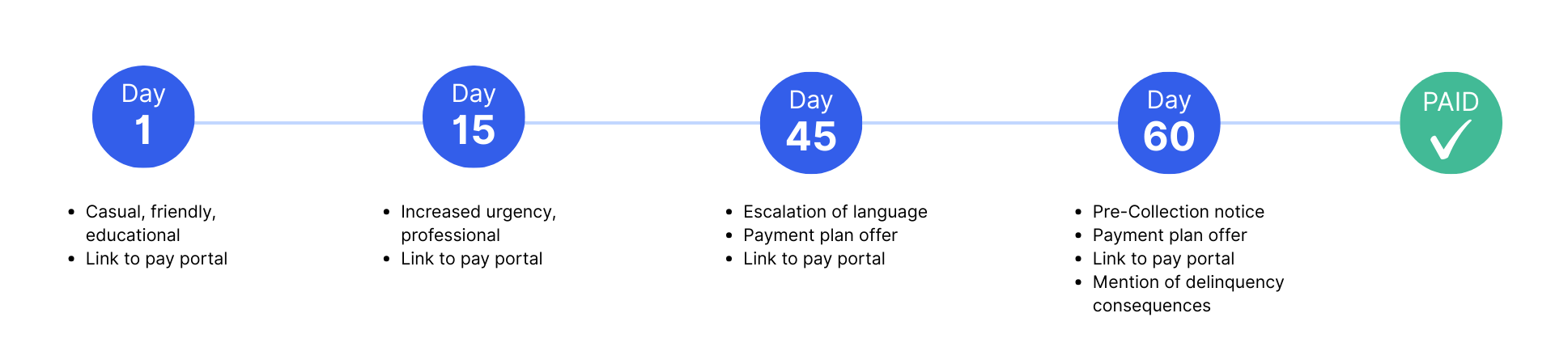
Behavioral Billing Automation Example
Offer Flexible Payment Options (Without Becoming the Bank)
Flexibility drives collections, but unmanaged flexibility creates risk. Automated payment plans outperform manual follow-ups by a wide margin (and patients prefer them).
Private Practices: Short, Automated Plans
- Auto-enrolled in short-term payment plans (3–6 months)
- Card-on-file with patient consent
- Flexible installment options for larger balances
Avoid manual tracking spreadsheets at all costs. Manual effort here increases errors which can lead to patient frustration.
DSOs: Centralized, Policy-Driven Payment Plans
DSOs and dental groups should:
- Standardize payment plan eligibility
- Require card-on-file enrollment
- Monitor default and adoption rates by location
Key difference: DSOs manage payment plans as a controlled financial product, not an exception.
Use Transparency to Reduce Billing Disputes
Billing confusion is one of the biggest reasons patients don’t pay. Delays between when balances are eligible and when bills are seen, confusing statements without context, and clunky payment interfaces all contribute to patient payment delays.
Private Practices: Education Builds Trust
- Use plain language explanations
- Separate insurance estimates from patient responsibility
- Show clear line-item explanations
- Provide digital receipts and balance histories
Patients are more willing to pay when they understand the “why” behind the balance.
DSOs: Standardization Reduces Volume
Like with payment plans, DSOs require a policy-driven approach to billing transparency. This can be achieved through:
- Staff training programs to create a unified quality standard across locations
- Consistent explanation templates and guarantor interaction SOPs
- Billing technology integration to automate statement transparency features while reducing staff intervention for most instances of billing
Transparency improves both patient experience and operational efficiency.
Point-of-Service Collections
The best dental patient billing strategy is prevention, not follow-up.
For Private Practices
Private practices win by maximizing same-day collections:
- Insurance estimates presented chairside
- Clear financial conversations at checkout
- Digital payment terminals or text-to-pay
Why it works: Fewer patients, closer relationships, faster decisions. Every dollar collected chairside is a dollar you don’t have to chase later.
DSO Best Practices
DSOs need standardized, system-driven point-of-service rules:
- Required balance checks before checkout
- Minimum collection thresholds by visit type
- Centralized policies enforced across locations
Why it works: Consistency prevents revenue leakage across dozens—or hundreds—of sites.
Track the Right Patient Billing KPIs
If you don’t measure it, you can’t fix it. Identifying, monitoring, and setting action thresholds for the most relevant KPIs for your practice is essential to a successful billing program. Some standard core KPIs to consider here include:
- Patient A/R aging (30 / 60 / 90 days)
- Average patient balance
- Collection rate by channel
- Write-offs as a percentage of patient revenue
Supplementary KPIs vary from organization to organization.
Private Practices Should Focus On
- Percentage collected at time of service
- Total carried patient A/R (sum and number of balances)
- Monthly write-offs
DSOs Must Focus On
- Patient A/R by location
- Performance variance across sites
- Payment plan enrollment rates
- EBITDA impact of patient collections
These metrics highlight where small workflow changes can have immediate impact. Remember that separating patient A/R from insurance A/R is essential for accurate decision-making.
Centralization vs Personalization
This contrast is critical to designing the right billing system. For private practices, personalization of the billing experience should be focus of the delivered policy.
For multi-location groups and DSOs, there is a balance that needs to be struck. Maintaining personalization at the local office level needs to dovetail with a unified organizational process framework.
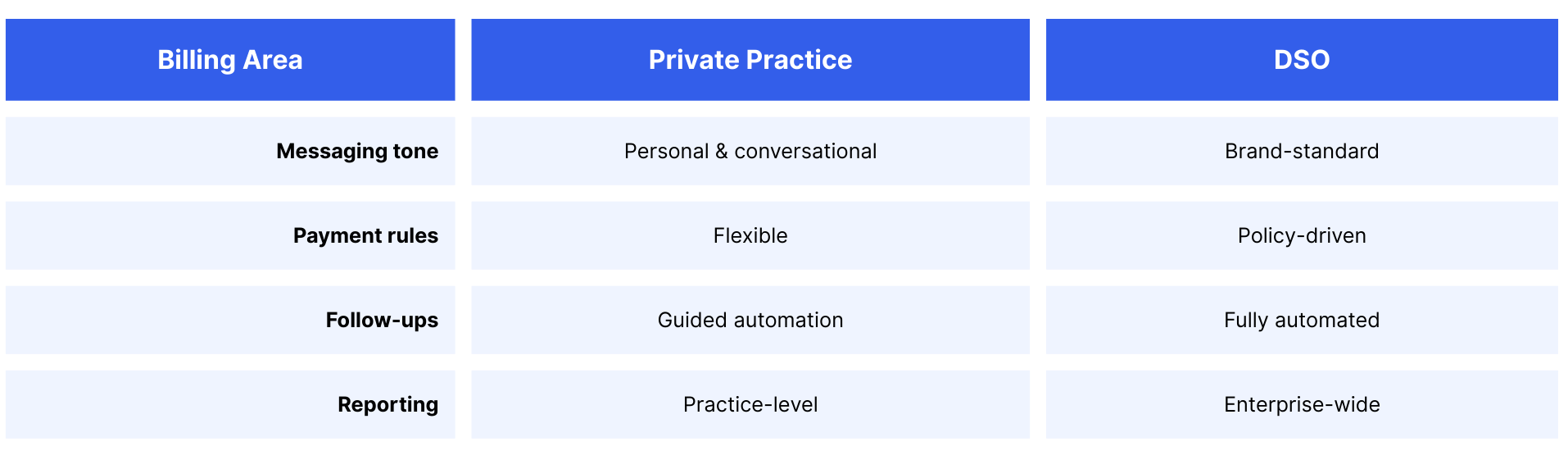
At this level, inconsistency is the enemy of scalability. From our experience with working with dozens of DSOs, we have identified the most essential characteristics of a balanced centralized billing system.
Reduce Staff Burnout With Billing Automation
Billing teams didn’t join dentistry to chase payments. Staff burnout is a real threat to practice financial health, and in 2026 there are software solutions to specifically address this issue. Billing automation directly impacts staffing stability, as workflows allow staff to:
- Focus on patient care
- Spend less time on uncomfortable conversations
- Reduce after-hours billing work
For DSOs this impact is magnified at scale with additional benefits including:
- Standardizing the financial experience by reducing reliance on manual touchpoints
- Simplifying and accelerating training programs
- Scaling billing bandwidth without increasing headcount
Consider billing automation as a retention strategy, not just a financial one.
Final Thoughts: Dental Patient Billing in 2026 Is Proactive, Digital, and Human
The dental practices that thrive in 2026 won’t be the ones working harder on billing–they’ll be the ones working smarter. By modernizing your dental patient billing process with automation, transparency, and flexibility, you can improve your cash flow while delivering a premier patient financial experience.
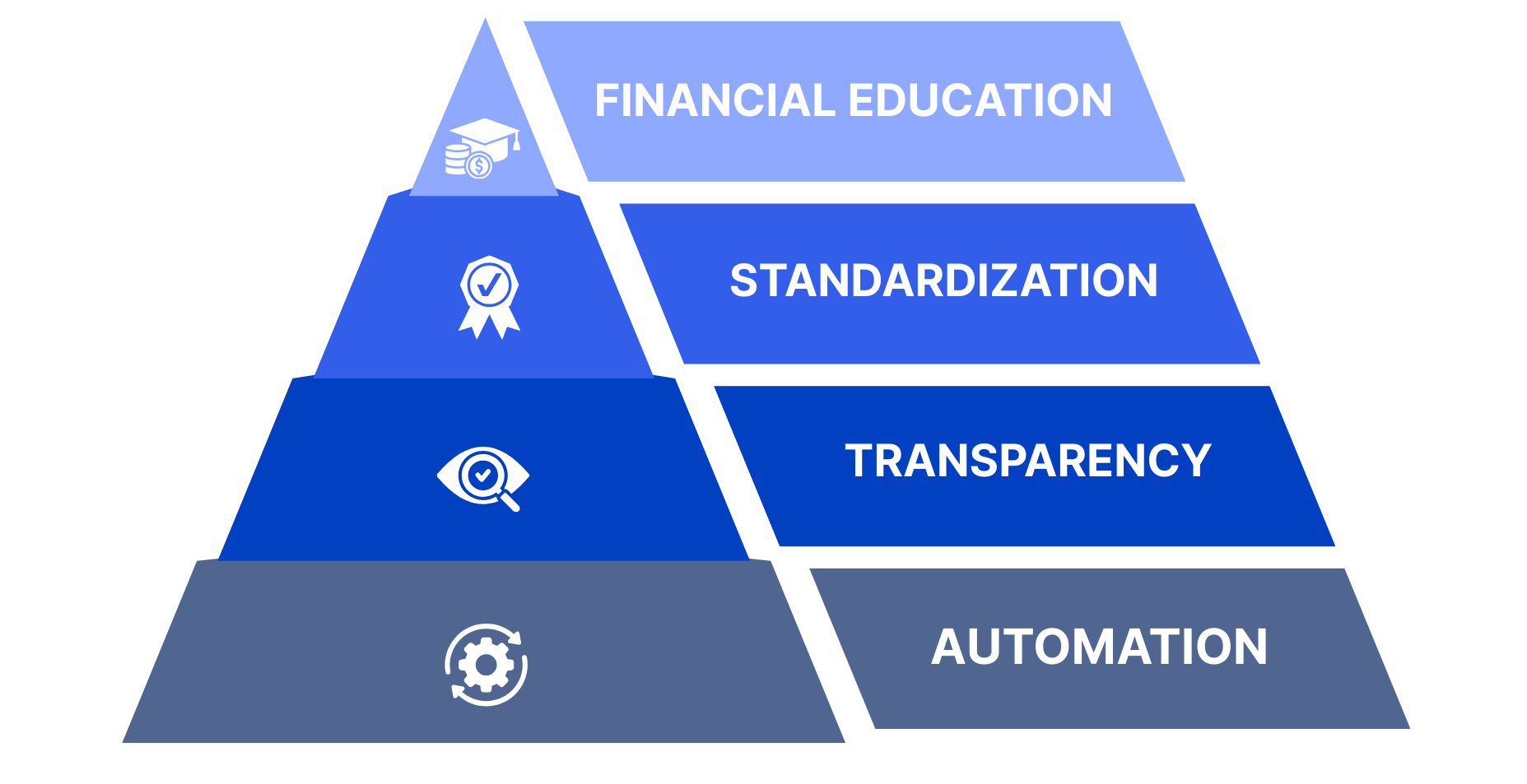
Regardless of organizational size or complexity, the fundamental elements of a successful billing system are consistent. Make it your goal this year to cultivate processes that incorporate automation, transparency, standardization, and financial education.